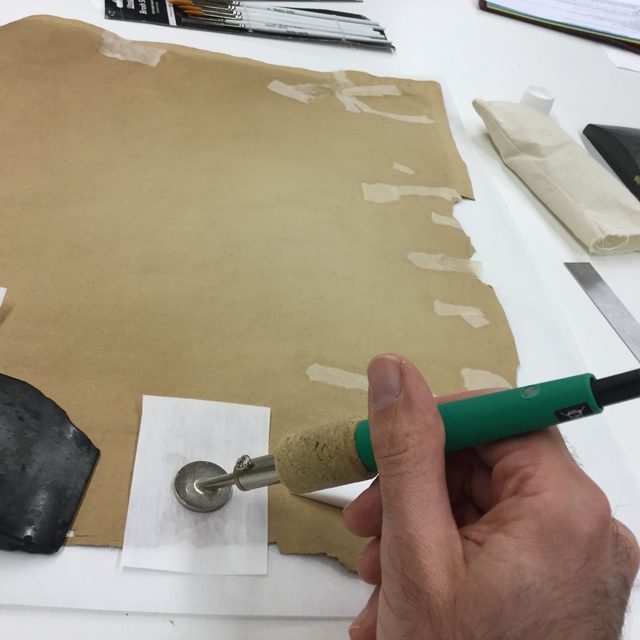
Are you curious about how to safely care for fragile paper objects – such as old letters, photos, or documents? In this accessible workshop, you will be introduced to the basic principles of paper restoration. You will learn how to gently remove dust from paper (dry cleaning) and how to carefully repair small tears without damaging the material.
Through demonstrations and practical exercises, you will discover which materials and techniques restorers use to protect paper heritage. You will get hands-on experience and receive tips that you can also apply at home when preserving personal documents or collectibles.
The workshop is suitable for everyone aged 16 and over; no prior knowledge is required. An interest in heritage, art, or caring for old documents is sufficient!
A paper conservator and restorer ensures that special paper objects are preserved for the future. Think of old books, drawings, prints, maps, photos, and documents. These fragile pieces can be damaged by age, light, moisture, or use.
The conservator first carefully examines the material and the damage. Subsequently, he or she cleans, repairs, and strengthens the paper using special techniques and materials that are safe and reversible.
The work is a combination of science, craftsmanship, and patience. Sometimes tears are repaired almost invisibly or discolorations are reduced, so that an object is stable again and can be better preserved or exhibited. In this way, the paper conservator helps keep valuable stories, artworks, and historical documents accessible to researchers as well as the general public, today and in the future.
Alexander Vander Stichele
After an initial education in psychology and sociology and several years of research experience, Alexander decided to retrain as a paper restorer and conservator. By regularly attending workshops at home and abroad, he continues to deepen his knowledge and stays up to date with the latest developments in paper restoration and conservation.
Alexander is the manager of La Route du Papier, the Belgian specialist shop for supplies related to paper restoration and conservation.
Storm Calle
Storm Calle (b. 1980) is a photographer and heritage worker specializing in historical photography, conservation, and paper restoration. Since 2006, he has been active within the Ghent City Archives, where he documents, digitizes, and conserves photographic collections. His daily interaction with fragile archival material led to intensive training in paper restoration at Syntra Brugge (starting in 2018), allowing him to further deepen his expertise in repairing, stabilizing, and preparing paper heritage for digitization, loan, and exhibitions.
In addition to his restoration work, he has contributed to numerous publications, photo-historical research projects, and exhibitions in collaboration with STAM, KIK, FOMU, and various archival institutions, among others. With his combined expertise in photography, historical processes, and restoration, Storm has established a unique position within the heritage field as a specialist in preserving and making accessible fragile photographic and paper-historical material.

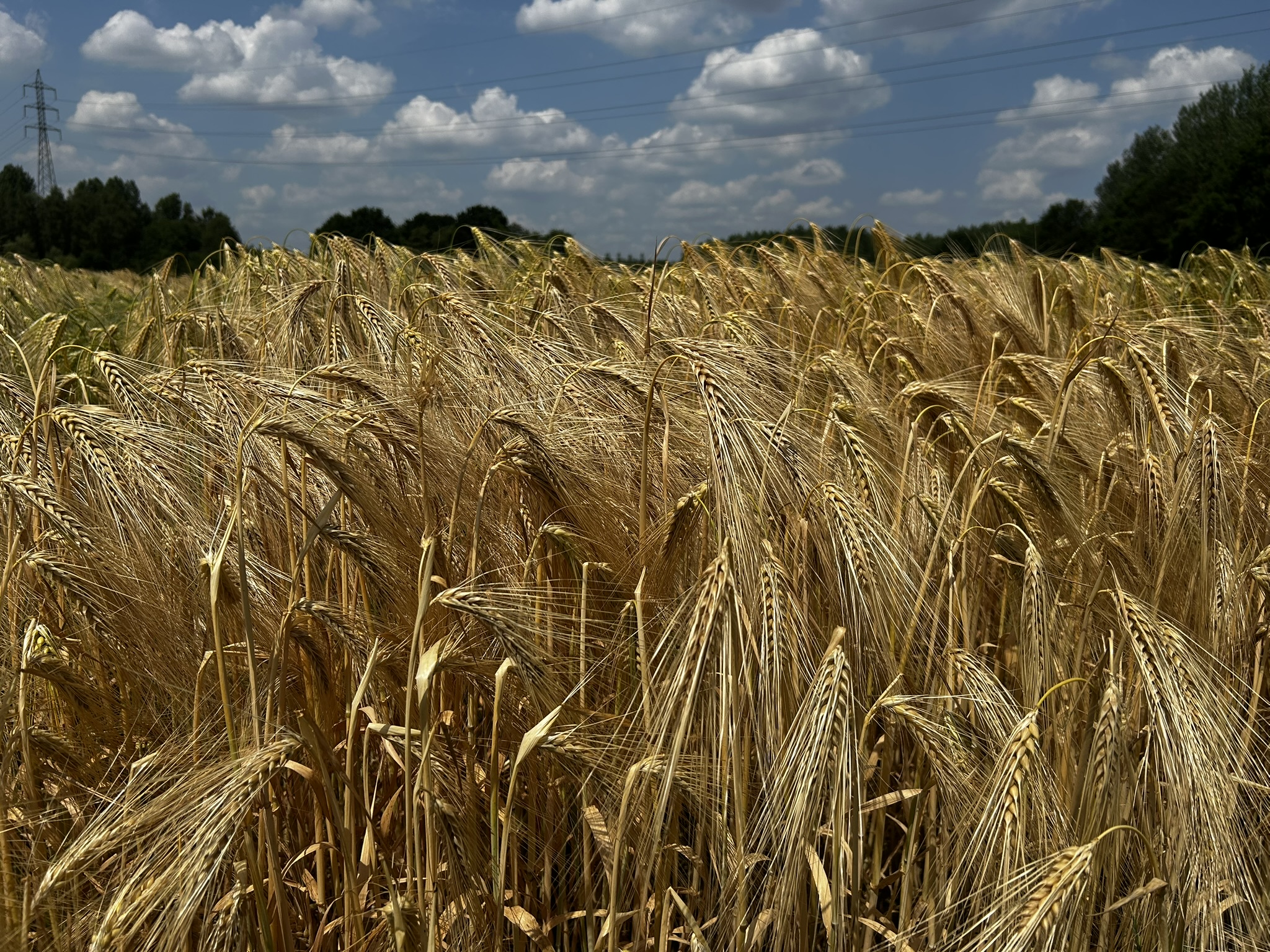
Mending flax rope with natural materials and a wire net.
We start with the twisting of fibers as a technique. You will make your own rope that has been coiled with care and attention using familiar and stable movements. With decorated strands, we get to work winding a lance and mastering the basic knots of mending. We work towards a structured pattern that systematically, rhythmically, and stably creates a wire net that can be used in everyday applications such as a shopping basket.
By the end, you will have made a net that you can take home and use.
Knisper Coaching: Guidance that is infectious. Working with your hands in an authentic, accessible way, through experience, and in a natural context. Getting started with bushcraft workshops to create various projects and tools from the forest. The guidance methodology starts with simple and honest materials from nature; with care and attention to the specific needs of the group or target audience, we choose tailored challenges. By combining coaching with productive manual work, participants achieve their results themselves. Here, we provide high-level support and, literally, guidance that is infectious.
Jelle Symons (Coach/Instructor – Leuven) is an enthusiastic coach and youth worker with a deep passion for craftsmanship, nature, and the outdoors. Drawing on years of experience in youth work, he combines craftsmanship with training, inclusion, and a strong appreciation for volunteering. Jelle believes that crafts are more than just techniques: they are connecting moments where people, young and old, discover their talents and learn from one another.
His background in outdoor education and bushcraft gives his workshops a warm, practical, and accessible approach. He creates spaces where experimentation is allowed, mistakes are made, and where everyone is welcome, regardless of experience or background. With great enthusiasm, he brings traditional manual labor back to life—from natural materials to ancient techniques—always with an eye for sustainability and collaboration.
At the festival, Jelle invites participants to slow down, connect, and rediscover what it means to create something with their own hands.
This workshop is offered by Erfgoedcel Mechelen and in collaboration with De Aanstekerij.

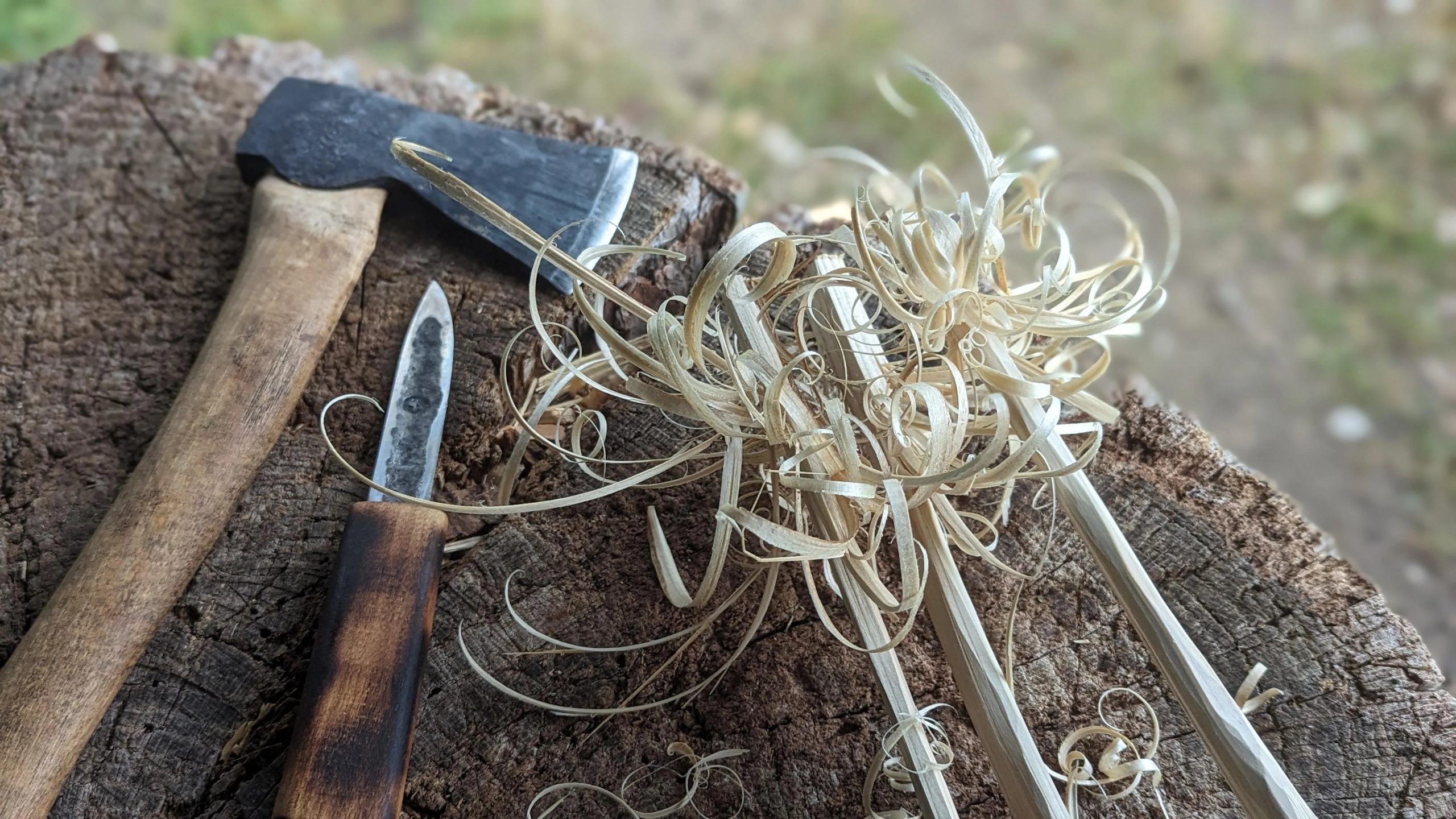
Using woodcarving knives and greenwood twigs, you will learn several techniques for performing conscious woodworking. The thought process starts with identifying opportunities within the wood and reading the possibilities within the branch. The hand gestures involve cutting, sawing, hammering, and drilling to achieve specific shapes, allowing your result to produce sound. You will create a tool by getting to work in a concrete and active way.
By the end, you will have made a small wooden whistle that you can take home and use.
Knisper Coaching: Guidance that is infectious. Working with your hands in an authentic, accessible way, through experience, and in a natural context. Getting started with bushcraft workshops to create various projects and tools from the forest. The guidance methodology starts with simple and honest materials from nature; with care and attention to the specific needs of the group or target audience, we choose tailored challenges. By combining coaching with productive manual work, participants achieve their results themselves. Here, we provide high-level support and, literally, guidance that is infectious.
Jelle Symons (Coach/Instructor – Leuven) is an enthusiastic coach and youth worker with a deep passion for craftsmanship, nature, and the outdoors. Drawing on years of experience in youth work, he combines craftsmanship with training, inclusion, and a strong appreciation for volunteering. Jelle believes that crafts are more than just techniques: they are connecting moments where people, young and old, discover their talents and learn from one another.
His background in outdoor education and bushcraft gives his workshops a warm, practical, and accessible approach. He creates spaces where experimentation is allowed, mistakes are made, and where everyone is welcome, regardless of experience or background. With great enthusiasm, he brings traditional manual labor back to life—from natural materials to ancient techniques—always with an eye for sustainability and collaboration.
At the festival, Jelle invites participants to slow down, connect, and rediscover what it means to create something with their own hands.
This workshop is offered by Erfgoedcel Mechelen and in collaboration with De Aanstekerij.
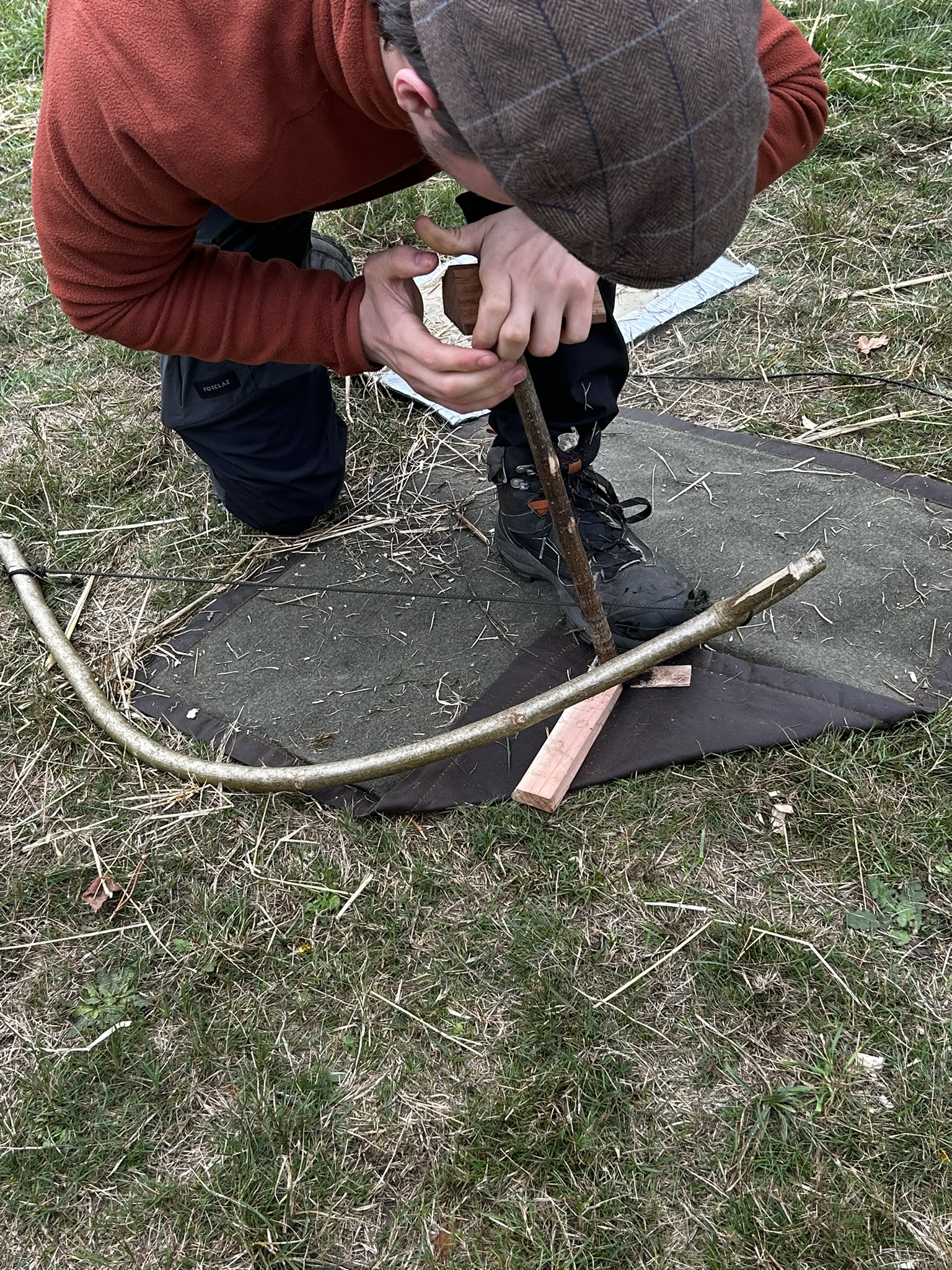
As a craft project in the forest, we get to work with raw wood elements, greenwood, and twigs. We bridge the gap between being self-sufficient in the forest and sustainably producing our own tools. We practice basic sawing, chopping, and carving techniques to create a stable and sturdy wire frame that allows us to securely tension a saw blade. The project focuses on bushcraft because it teaches you how to make something using a few basic techniques, which can then be untied to take along on a trip.
By the end, you will have made your own handsaw that you can take home and use.
Knisper Coaching: Guidance that is infectious Working with your hands in an authentic, accessible way, through experience, and in a natural context. Getting started with bushcraft workshops to create various projects and tools from the forest. The guidance methodology starts with simple and honest materials from nature; with care and attention to the specific needs of the group or target audience, we choose tailored challenges. By combining coaching with productive manual work, participants achieve their results themselves. Here, we provide high-level support and, literally, guidance that is infectious.
Jelle Symons (Coach/Instructor – Leuven) is an enthusiastic coach and youth worker with a deep passion for craftsmanship, nature, and the outdoors. Drawing on years of experience in youth work, he combines craftsmanship with training, inclusion, and a strong appreciation for volunteering. Jelle believes that crafts are more than just techniques: they are connecting moments where people, young and old, discover their talents and learn from one another.
His background in outdoor education and bushcraft gives his workshops a warm, practical, and accessible approach. He creates spaces where experimentation is allowed, mistakes are made, and where everyone is welcome, regardless of experience or background. With great enthusiasm, he brings traditional manual labor back to life—from natural materials to ancient techniques—always with an eye for sustainability and collaboration.
At the festival, Jelle invites participants to slow down, connect, and rediscover what it means to create something with their own hands.
This workshop is offered by Erfgoedcel Mechelen and in collaboration with De Aanstekerij.
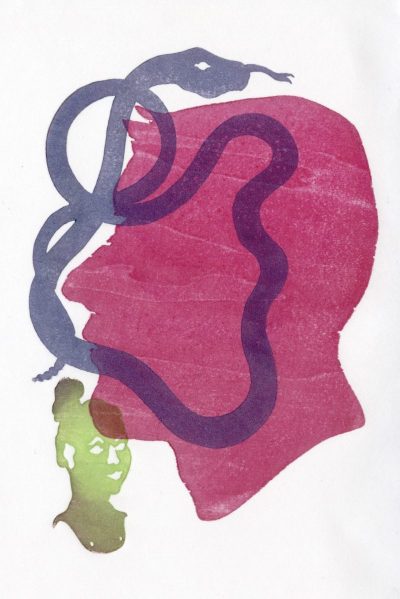
Are you particularly moved by the subtle and magical colors and color transitions when viewing a Japanese woodcut? Then this workshop is an absolute must. Here, you will discover the entirely unique printing method of this art form and get to work with it yourself. Using several pre-cut wood plates, you will create your own design. Together with your instructor, you will print your design and discover the wondrous and pictorial possibilities of printing with simple water-based paint.
You will go home with a mini-edition of 4 prints that you can enthusiastically show to friends and family.
With these workshops, we focus primarily on (absolute) beginners and amateurs who would like to experience the special character of the Japanese woodcut firsthand.
The Japanese woodcut, also known as mokuhanga, is the result of nearly 425 years of perfecting the woodcut technique, a technique that is also known in our region and has been practiced here since around 1400: the woodcut. This printing technique, and certainly its Japanese variant, stands out for its strong artisanal character, namely the extensive handiwork required to produce a satisfying woodcut. It is not enough to be able to create beautiful images; one must also think and feel within the possibilities and limitations of the material: the wood, the cutting tools, the paint, and the paper. A good Japanese woodcut is therefore the result of finding a perfect balance between thorough technical skills and free, creative, and artistic ideas. Japanese woodcut is one of the least toxic printing techniques in existence, possessing a very sustainable character and a low ecological impact, which directly explains its rising popularity worldwide.
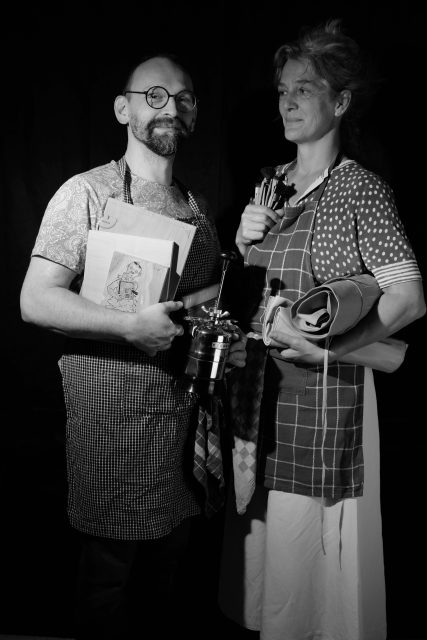
Mokuhanga Magic is a creative project by Soetkin Everaert & Vladimir Ivaneanu. They pay homage to the centuries-old Japanese art of woodcutting – mokuhanga – a craft in which tradition, patience, and creativity come together. Each print is hand-carved and printed using natural materials and water-based pigments, resulting in unique and special works of art. Mokuhanga Magic is their way of sharing this beautiful, eco-friendly art form with the world. Soetkin and Vladimir offer original prints, workshops, and tools for both beginning and experienced artists. It is their mission to inspire, educate, and build a community around the magic of mokuhanga. Join them on this artistic journey, where every print tells a story.
Since 2019, Bokrijk | Craftsmanship & Heritage has been Bokrijk’s center of expertise focusing on the contemporary relevance of historical woodworking and construction techniques. From the Campus of Craftsmanship, V&E inventories, researches, supports, and communicates this craftsmanship heritage throughout Flanders and Brussels. As a service provider, V&E is part of a strong national network and also operates as an international knowledge actor. Jeroen Desaver and Rien Bogaert will be present to share information about this.


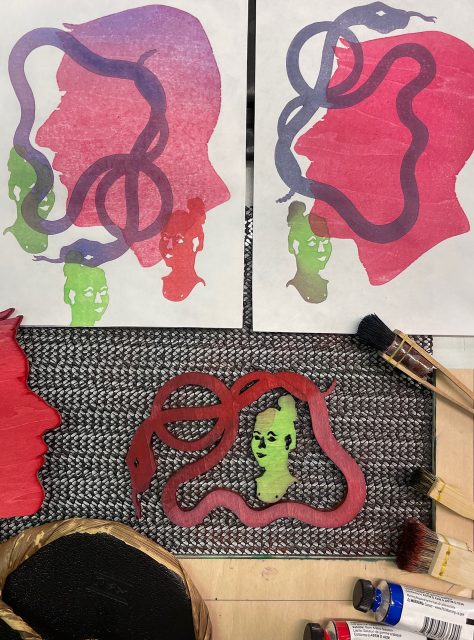
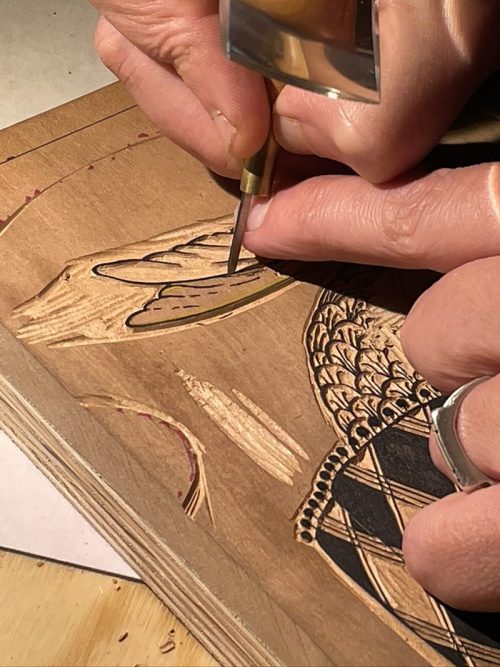
Have you ever stared in amazement at a Japanese woodcut, wondering how on earth those subtle images full of fine details were carved from wood? In this workshop, you will discover the secret of this Japanese woodcut technique, but even more so, of our own woodcut technique. After a brief introduction, you will get straight to work. The instructor will show you how to handle the carving tools, and you will receive a practice board to immediately test and practice your carving skills.
You will take this board home after the workshop so that you can continue taking steps towards becoming a master carver.
With these workshops, we focus primarily on (absolute) beginners and amateurs who would like to experience the special character of the Japanese woodcut firsthand.
The Japanese woodcut, also known as mokuhanga, is the result of nearly 425 years of perfecting the woodcut technique, a technique that is also known in our region and has been practiced here since around 1400: the woodcut. This printing technique, and certainly its Japanese variant, stands out for its strong artisanal character, namely the extensive handiwork required to produce a satisfying woodcut. It is not enough to be able to create beautiful images; one must also think and feel within the possibilities and limitations of the material: the wood, the cutting tools, the paint, and the paper. A good Japanese woodcut is therefore the result of finding a perfect balance between thorough technical skills and free, creative, and artistic ideas. Japanese woodcut is one of the least toxic printing techniques in existence, possessing a very sustainable character and a low ecological impact, which directly explains its rising popularity worldwide.
Mokuhanga Magic is a creative project by Soetkin Everaert & Vladimir Ivaneanu. They pay homage to the centuries-old Japanese art of woodcutting – mokuhanga – a craft in which tradition, patience, and creativity come together. Each print is hand-carved and printed using natural materials and water-based pigments, resulting in unique and special works of art. Mokuhanga Magic is their way of sharing this beautiful, eco-friendly art form with the world. Soetkin and Vladimir offer original prints, workshops, and tools for both beginning and experienced artists. It is their mission to inspire, educate, and build a community around the magic of mokuhanga. Join them on this artistic journey, where every print tells a story.
Since 2019, Bokrijk | Craftsmanship & Heritage has been Bokrijk’s center of expertise focusing on the contemporary relevance of historical woodworking and construction techniques. From the Campus of Craftsmanship, V&E inventories, researches, supports, and communicates this craftsmanship heritage throughout Flanders and Brussels. As a service provider, V&E is part of a strong national network and also operates as an international knowledge actor. Jeroen Desaver and Rien Bogaert will be present to share information about this.
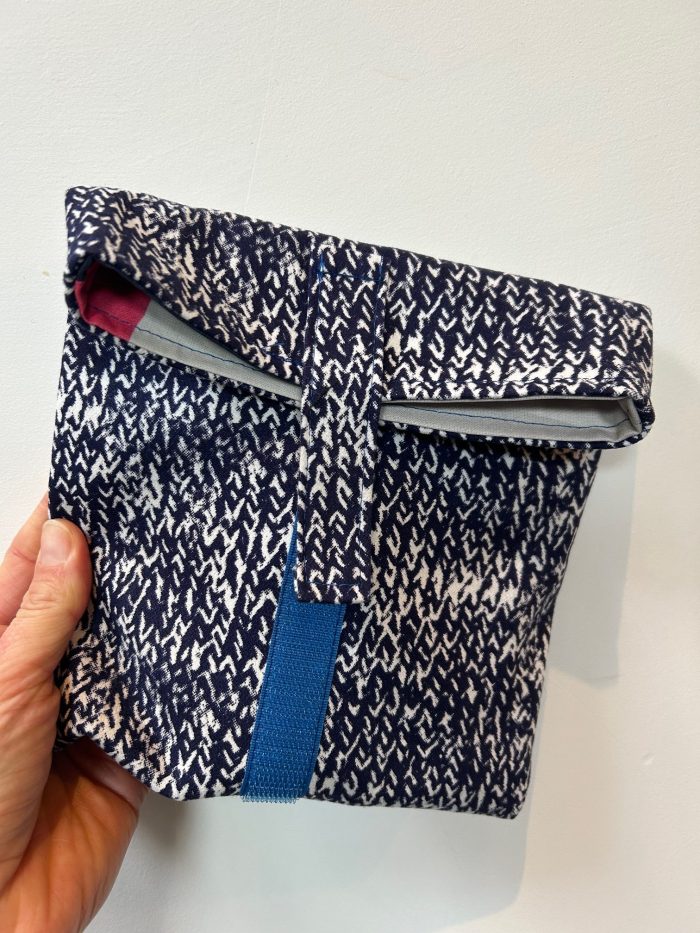
During this workshop, you will learn to make a reusable sandwich bag step by step. Sustainable, beautiful, and practical: the ideal combination!
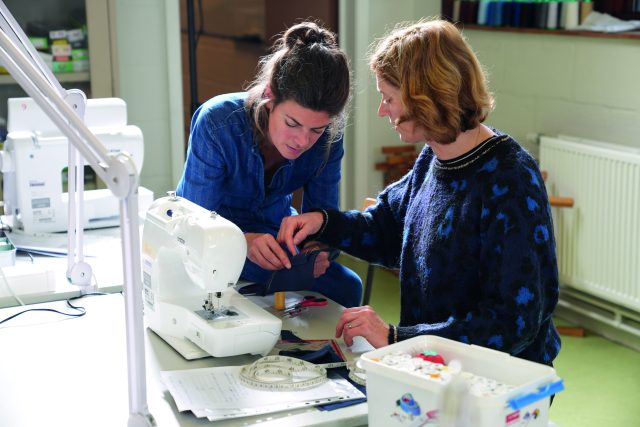
You will have a choice of various fabrics and can use our school’s sewing machines and all the necessary materials. Laurence will guide you using examples to achieve a good end result. We start with a brief introduction to the sewing machines, after which we will soon be proudly holding our first project in our hands!
Sewing experience is not necessary at all; a little dexterity and a lot of enthusiasm are sufficient for this workshop!
This workshop is offered by CVO GENT.
CVO GENT CHERISHES ARTISANAL HERITAGE
Crafts contribute to the cultural identity and diversity of our society. They reflect the traditions, values, and history of our community. That is why we at CVO GENT consider it important to keep our cultural heritage alive and pass it on to this and future generations.
We offer 6 crafts; Hand weaving, Bookbinding, Lace making, Upholstery, Ornamental metalwork, and Sewing.
SEWING
The sewing course at CVO GENT consists of various modules. You start as a complete beginner, aiming to have already produced 5 finished pieces by the end of the first year. Each subsequent year, more and more difficult techniques are introduced, which together lead to at least 2 finished custom-made pieces per school year. As you progress, you gain more insight into the various sewing techniques, develop your own style, and learn to work more and more on custom-made items. Nothing is more fun than receiving compliments on your self-made outfit!

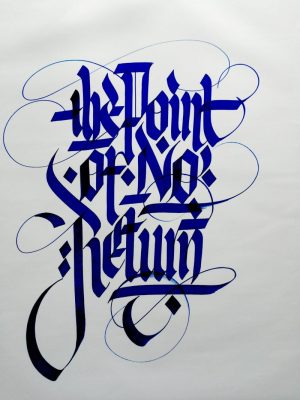
Artists Lindsay van Vliet and Daan Wille have joined forces as Team Blazin. Both have mastered calligraffiti, a fusion of calligraphy and graffiti.
With the renowned graffiti artist Shoe as an inspiration, Lindsay has also become an all-rounder in giving workshops, ranging from Stencil like Banksy, Doodle like Keith Haring, and, of course, calligraffiti. Together with Daan, she also regularly creates murals.
In this workshop, you will watch Blazin at work up close and, with her help, create your own artwork with your name on it.
We first offered this workshop in 2015, in collaboration with the Street Art Museum Amsterdam. Daan also gave workshops during Craft in Focus New York in 2017 and 2019. This year, due to popular demand, it is back in Brussels, with Lindsay!


Ebru is an ancient painting technique that has existed for many centuries. With this technique, we paint on water.
Marbling works with a wet base layer on which the artist applies patterns. These patterns are created by allowing colors to float on the surface of water, after which the colors are transferred onto a sheet of paper (or textile).
This type of ornament has been used throughout the centuries to decorate all kinds of surfaces. It is often used as a support for writing official texts or in calligraphy, for posters, and for endpapers. Each creation has a different pattern, giving the object a unique character.
Participants go home with the marbled paper they made themselves.
Demet Unlu Ancion was born in Ankara in 1971. In 1987, she studied art history and archaeology at the University of Ankara. During her art studies, she participated in drawing workshops. She began practicing Ebru art at the Esengul Inalpulat studio in Ankara.

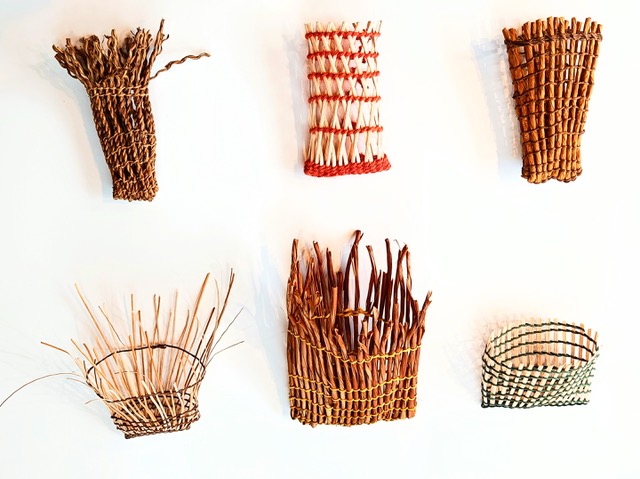
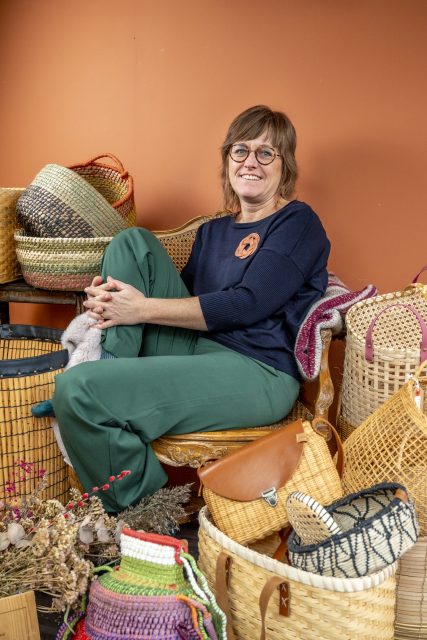
Weaving is an age-old craft in which natural, pliable materials are woven by hand into functional objects or furniture components. Although the techniques are related, they differ in application and material use.
Under guidance, you will get to work with authentic techniques and recycled materials, such as rushes, rattan, seagrass, and papercord from old chair seats. We will go through the various stages of weaving: from setting up the base (the ‘stakes’) to refining the walls.
Whether you want to make a functional basket or an abstract artwork for the wall, you will discover how material and technique come together to create a tangible result. No two woven objects are the same; you will go home with a piece that bears your own signature.
Behind LoreVlecht is the Bruges artisan Hannelore Maet. Driven by her passion for centuries-old weaving, she transformed her garage into a charming private studio in 2019, where she experiments daily with natural materials such as rattan, rushes, papercord, seagrass, and more.
Hannelore distinguishes herself through a contemporary approach to traditional techniques. She is not only a maker but also a passionate teacher with over 25 years of experience, sharing her knowledge through various workshops and courses. In her studio in Bruges, she teaches students in small groups how to craft baskets, lampshades, or even handbags themselves.
Additionally, she is known for her expertise in repairs, such as restoring chair seats. Her work bears the label Handmade in Brugge, a recognition for local makers who hold craftsmanship and authenticity in high regard. Hannelore’s driving force is the “addictive” tranquility of weaving and the endless possibilities of this craft.
Photographer: Isabel Clyncke
This workshop is made possible by Handmade in Brugge.