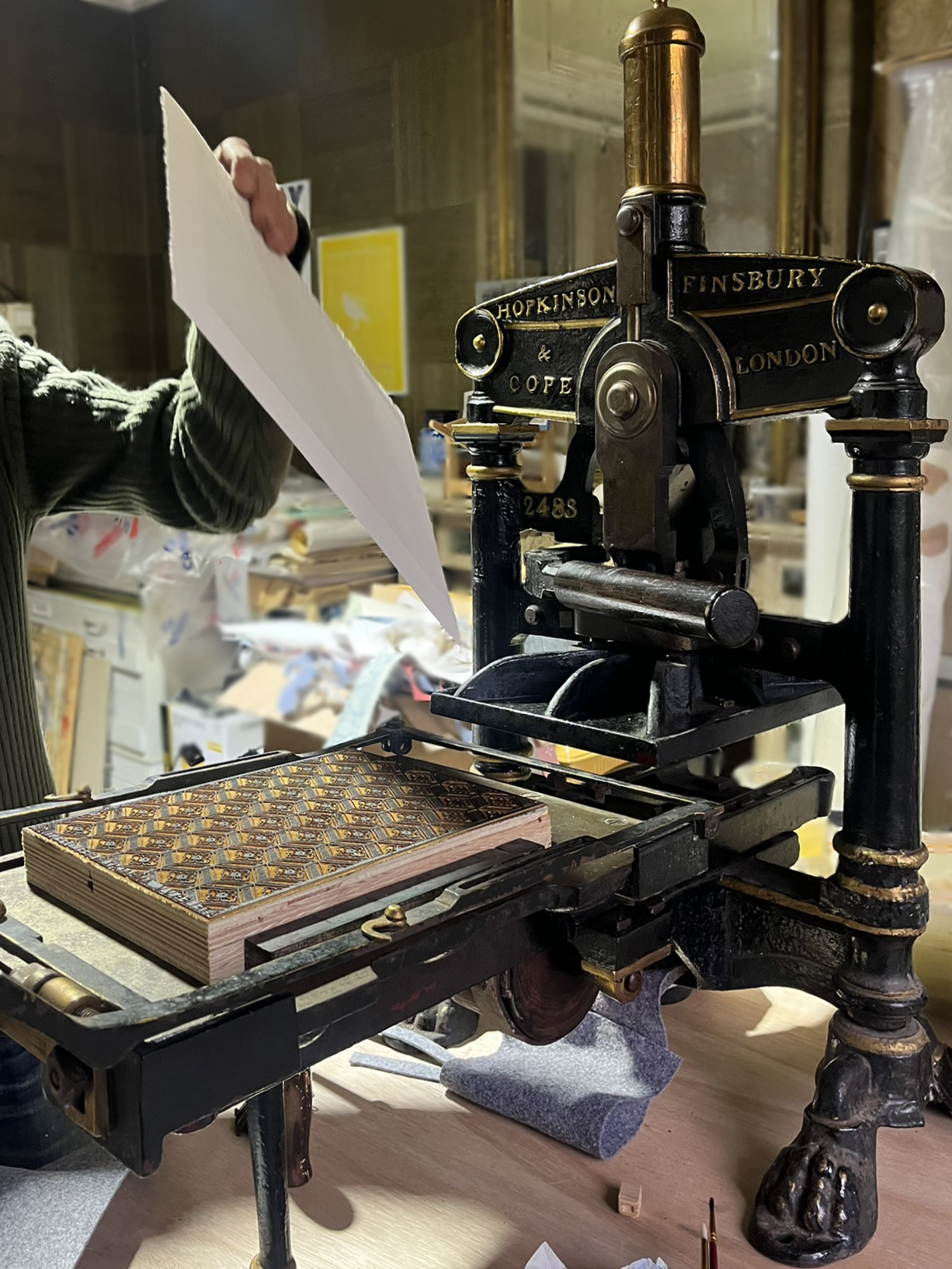
During this workshop, you will get hands-on with a classic platen press from the first half of the 19th century. You will print a domino, an early form of wallpaper, using a wooden block.
After printing, you will finish your print with color, applied using a stencil and brush. For this, you will use an ink prepared according to a historical recipe, based on gum arabic and pigment.
You will learn how printed matter was constructed in the past: applying ink, positioning the paper, setting the print, and finishing. No theory, just doing.
You will work with authentic materials: wooden printing blocks, traditional inks, and Arches paper.
Afterwards, you will take home a unique, handmade sheet.
Everything happens continuously: you can join in, participate, and move on. Short, tangible, and direct.
Atelier V.V. creates hand-printed wallpaper using a technique that had disappeared from Belgium for more than half a century: printing with the slab. Dimitri and Vicky print their patterns block by block, color by color, using large wooden printing blocks and paint they make themselves based on historical recipes.
Where industrial wallpaper is flat and uniform, here a surface emerges with nuance, depth, and small variations — visible and tangible.
In addition to rolls of wallpaper, Atelier V.V. also prints dominoes: early forms of printed paper that served as precursors to wallpaper. These are printed sheet by sheet, just as in the past.
The atelier works on both new interiors and restorations, always with respect for materials, techniques, and history.
Dimitri Vermeylen is the driving force behind Atelier V.V., which he founded together with his wife Vicky Vermeire. After a career of more than twenty years in the business world, he returned to a craft practice, with a strong focus on historical printing techniques.
He immersed himself in the subject through volunteer work at the Industrial Museum in Ghent, among other things, where he worked with typography and lithography. Today, he and Vicky combine that technical craftsmanship with their own research into historical dyeing and printing methods.
Atelier V.V. has grown into one of the few studios worldwide that prints wallpaper in this way again.
During workshops and demonstrations, Dimitri shares his knowledge in a direct manner: not academically, but by doing, with attention to materials and techniques.
Thanks to Erfgoedcel Vlaamse Ardennen (Variant), FILA Benelux for sponsoring the Arches paper, and thanks to Patrick Goossens.
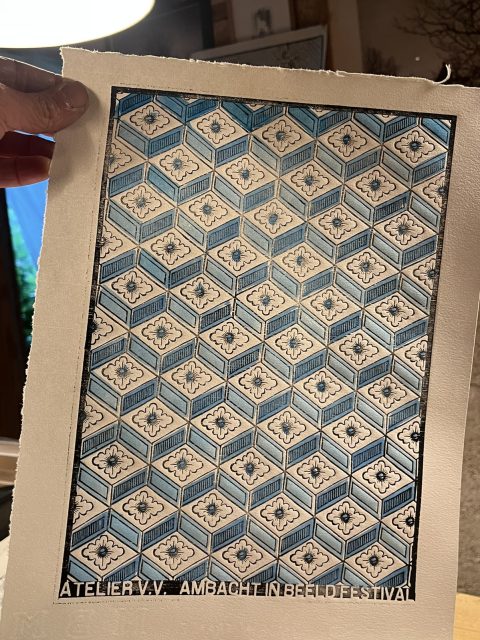
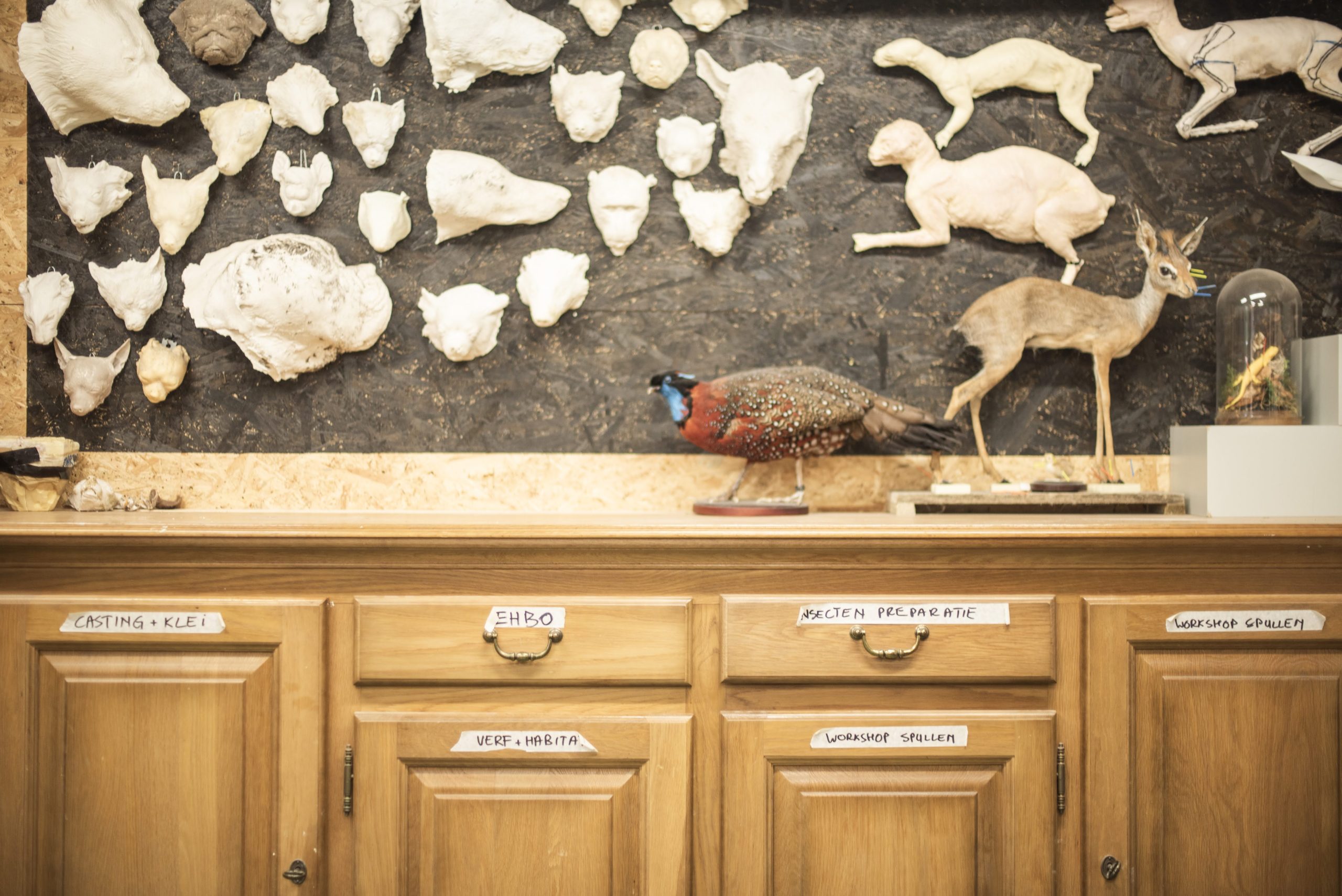
Photo © Femke den Hollander
We are all secretly curious about what happens behind the scenes at the taxidermist’s. Taxidermy, the mounting or preparation of animals, is a craft in which the taxidermist presents deceased animals as if they were alive. It seems logical that a mounted animal does not simply stay in the correct pose. But how does a taxidermist actually start his work? When an animal has died, what step does he take first? And how do taxidermists ensure that those animal heads are so expressive?
This escape game teaches you, through puzzles and riddles, how a taxidermist goes about mounting an animal. The escape game is intended for adventurous adults, curious teenagers, and children with their families. Come measure, feel, and solve puzzles, and open the secret vault…
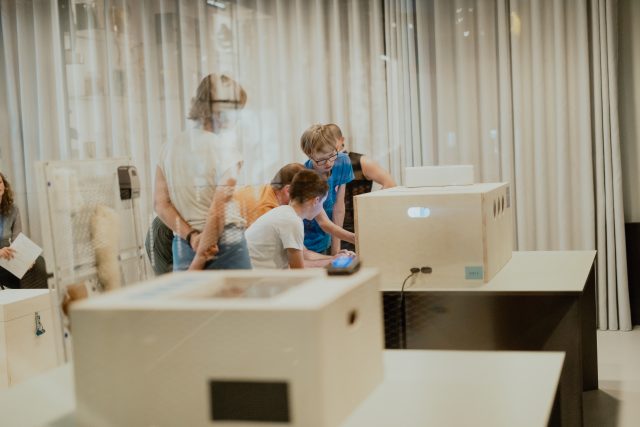
Photo @GUM and Julie Vervenne
ETWIE is the expertise center for technical, scientific, and industrial heritage in Flanders and Brussels. We support everyone who is passionate about machines, tools, vehicles, and crafts – from museum professionals and volunteers to private collectors – and bring them together in a strong network where knowledge and experience are shared. In this way, we ensure that techniques, craftsmanship, and technical know-how are not lost, but are researched, strengthened, and passed on to future generations.

During the festival, children can make their own mosaics using all kinds of odds and ends. They can use any kind of material—those bits and pieces, toys, and trinkets that everyone has lying around.
Materials will be available for the children to choose from to form their own mosaic. The children can then decide for themselves whether to fill in a drawn silhouette or to sort out the colors to create a more realistic image.
The panels will eventually form one colorful whole.
Ismaël Bils studied installation art at KASK in Ghent and creates all kinds of artworks, primarily using recycled materials. Years ago, Ismaël started making mosaics from all kinds of waste materials. He began with simple silhouettes, filled with all kinds of colorful material. First on boards and on the wall of his room. But because he enjoyed it so much, he eventually decorated the entire garden wall of his house.
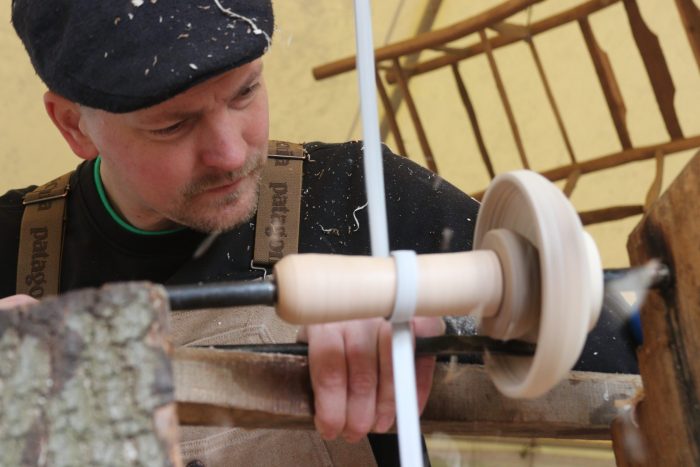
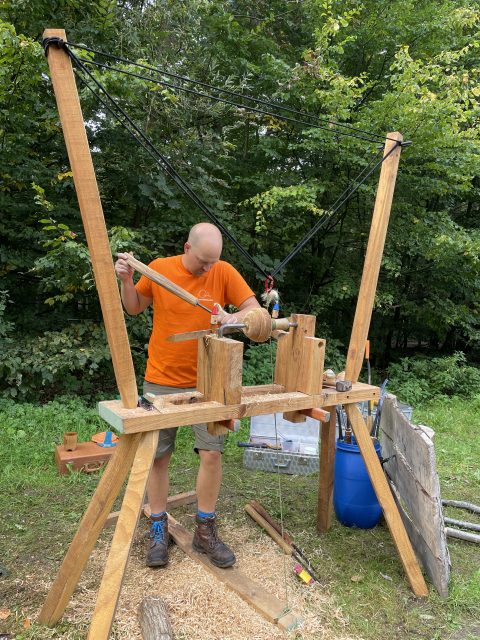
The rocking lathe is the predecessor of the electric lathe. This foot- and muscle-powered lathe is used to turn bowls, cups, plates, jars, boxes, and other utensils from wood.
The craftsman starts with a rough piece of fresh wood and uses an axe to achieve a rough shape; subsequently, he uses self-forged turning jigs and the rocking lathe to give the object its final form.
Pieterjan’s adventure with the rocking lathe began out of curiosity about traditional greenwood working techniques. This journey of discovery started years ago with spoon and other carving, transitioned into making stools and chairs, and eventually led to turning on a rocking lathe. A world of turned objects, such as bowls, boxes, cups, and jars, opened up for him.
It soon became a passion that led him to embark on a Master-Apprentice program together with Martijn Van Gerwen. Through this scholarship, he and Martijn apprenticed with experienced craftsmen in England. This strengthened his growth as a green woodworker, and he is breathing new life into this ancient craft. By now organizing workshops himself, he encourages others to discover this beautiful craft and experience what it is like to work with green wood and create unique, usable objects.
During the festival, he will give free continuous demonstrations.
This program is made possible by Dijk92.
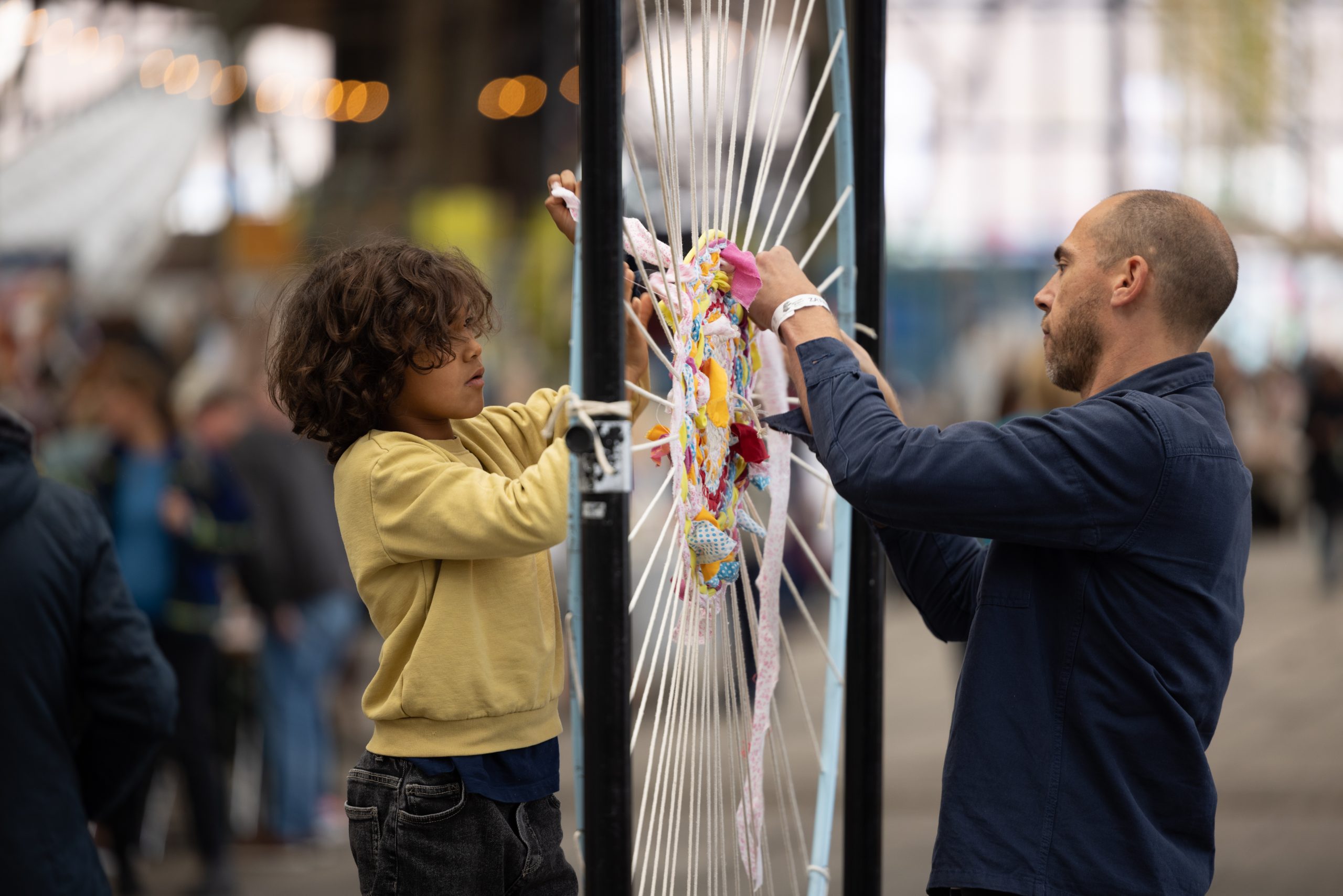
This installation allows every visitor to contribute to a giant circular loom.
Just roll up your sleeves, smile, and create something substantial connecting with all those who have gone before or are following you.
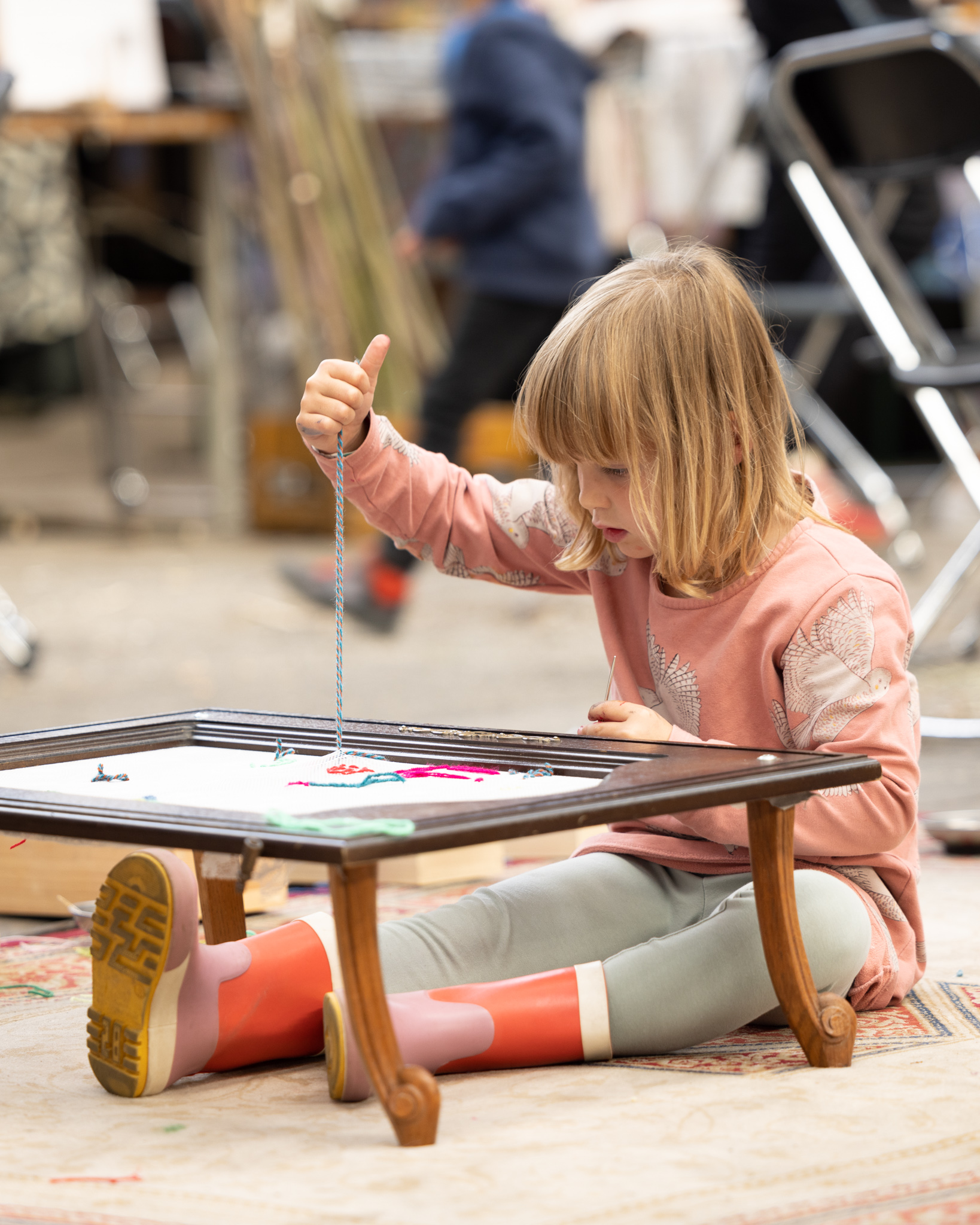
Take a seat (together with your child) at an embroidery table and embroider without compromise, without prescribed rules or patterns.
Our tables were specially designed for small children to embroider on in a simple way. We find the ‘doing’ and the pleasure in doing it more important than the result.
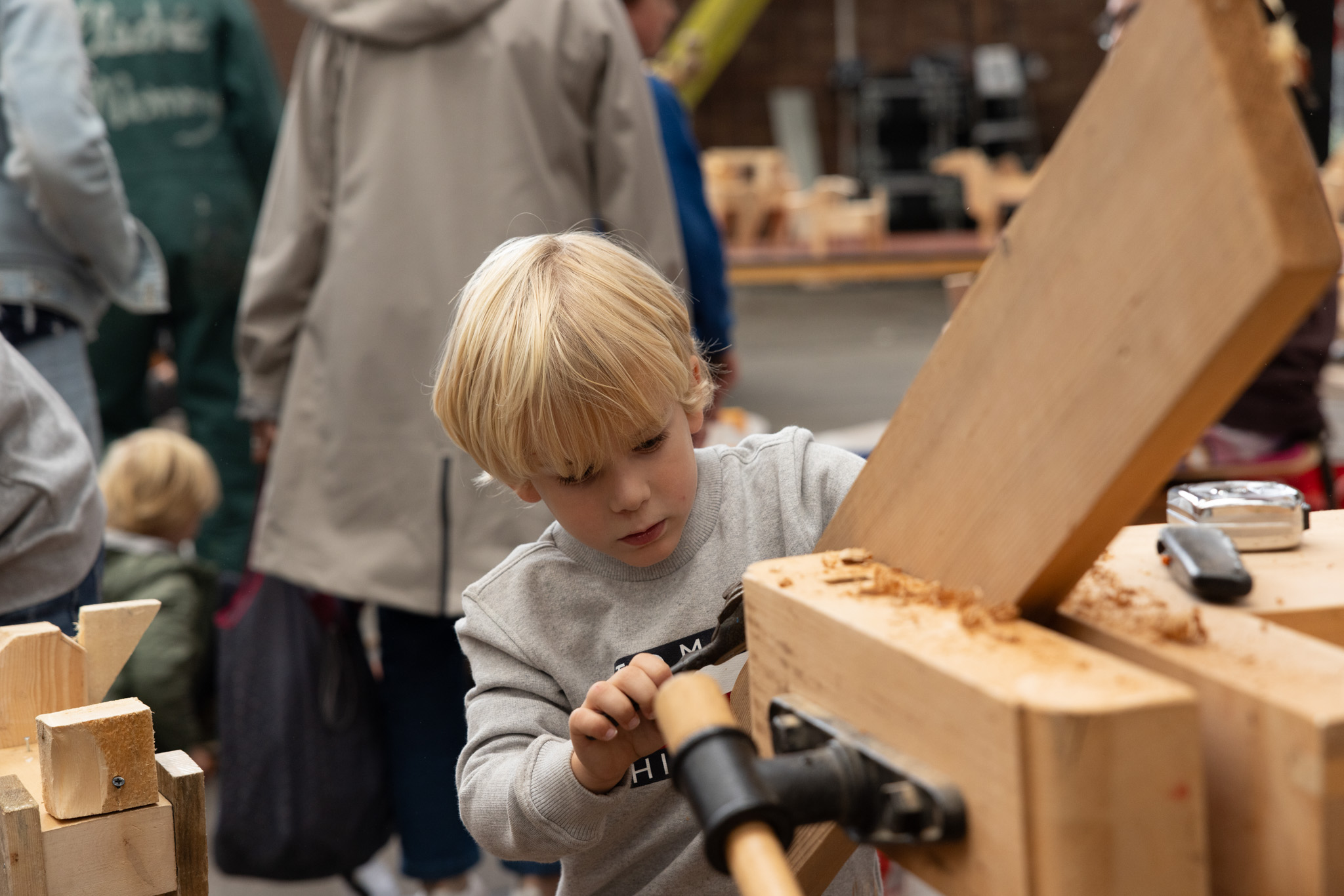
We are organizing an open workshop where children and their parents/guardians build a joint project using wood.
Together, we bridge a fictional river. We build a real bridge from where we are now to where we want to go.
The bridge connects us with our fellow builders, but also with the place we want to be (get to).
Please note: parents/guardians are responsible for their children at all times and must remain present during the workshop.
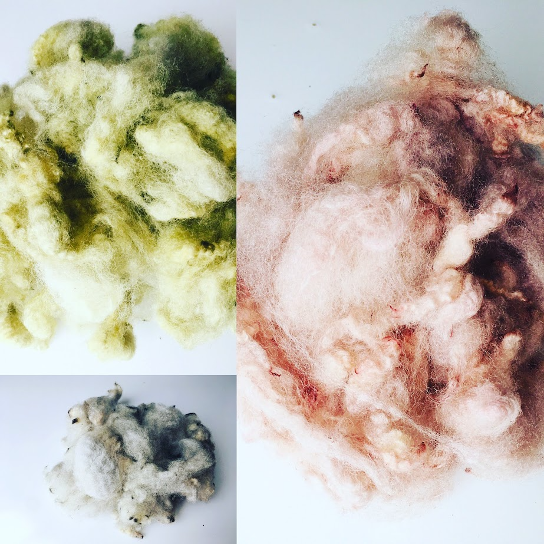
At the WOOL-Lab information stand, you can learn more about the development of the STEM learning trajectory and the partners. Young and old are welcome to feel, smell, and examine wool fibers under a microscope. There are also a number of experiments ready to explore the surprising properties of wool, such as its acoustic, insulating, hydrophilic, and hydrophobic properties. We invite you to come and discover the versatility of wool!
How can artisanal knowledge and skills regarding sheep’s wool go hand in hand with innovation, sustainability, and STEM (Science, Technology, Engineering & Mathematics)? This comes together in the STEM project ‘WOOL-Lab’, which makes children (aged 10 – 13) aware of the value of wool as a sustainable raw material. The children investigate the qualities and properties of wool and explore both artisanal knowledge and technological innovations in wool processing. The project provides space for reflection on the ecological impact of wool production and processing. In addition, the children design a sustainable product in co-creation that adds value to wool waste and residual streams and generates a positive impact on society.
This project is being realized in Mechelen and Bruges (2026 – 2027), with a rollout to the Kempen region following the project phase. Partnership between: Werkplaats immaterieel erfgoed, WiWeTeR-STEM-Expertisecentrum, Het Woolly Collectief, and Howest Mind- and Makerspace – with support from VLAIO.

photo: Wool dyed with woad seed – © Pigmento vzw